justingreerbooks.com
Justin Greer
fantasy • science fiction • adventure • horror
tales of myth, magic, and hope
leaf & lore
welcome to my website!here you'll find everything you want to know and more about my writing: books, worlds, characters, backgrounds, thoughts, musings, and all the in-between bits of fun.Scroll down to explore my writing, bonus materials, my webstore, and further information about me and my work.
the books
I write stories inspired by mythology, history, folklore, nature, music, philosophy, dreams, magic, and wonder, drawing from everything that interests me and suffused with my passion for language, noble sacrifices, hope, and adventure.
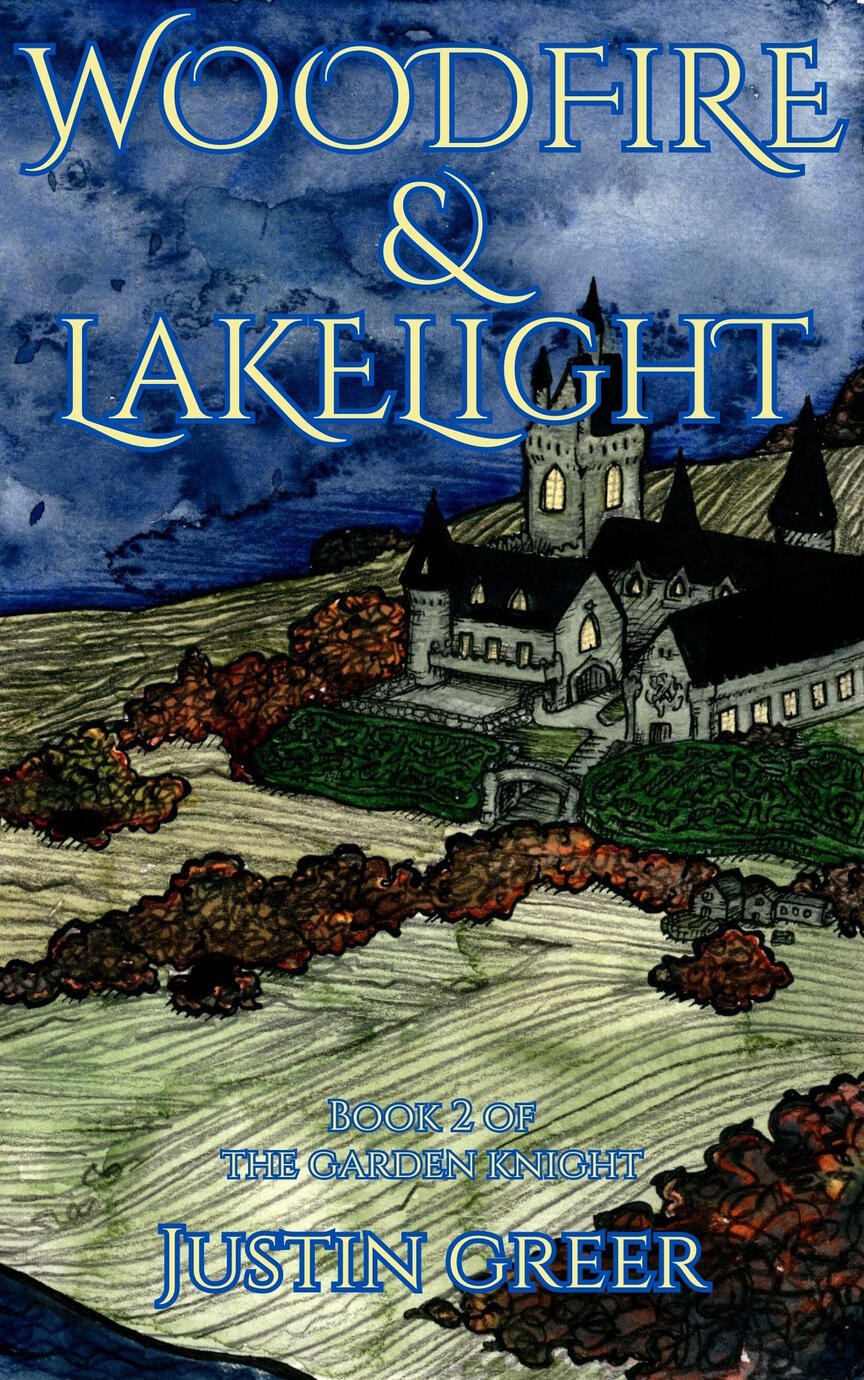
The Garden Knight is a heroic fantasy-adventure series filled with magic, wonder, the beauty of nature, and a bit of whimsy, led by a gentle gardener and his loyal dog.Click the button above to be taken to The Garden Knight homepage, which is replete with information about the series.
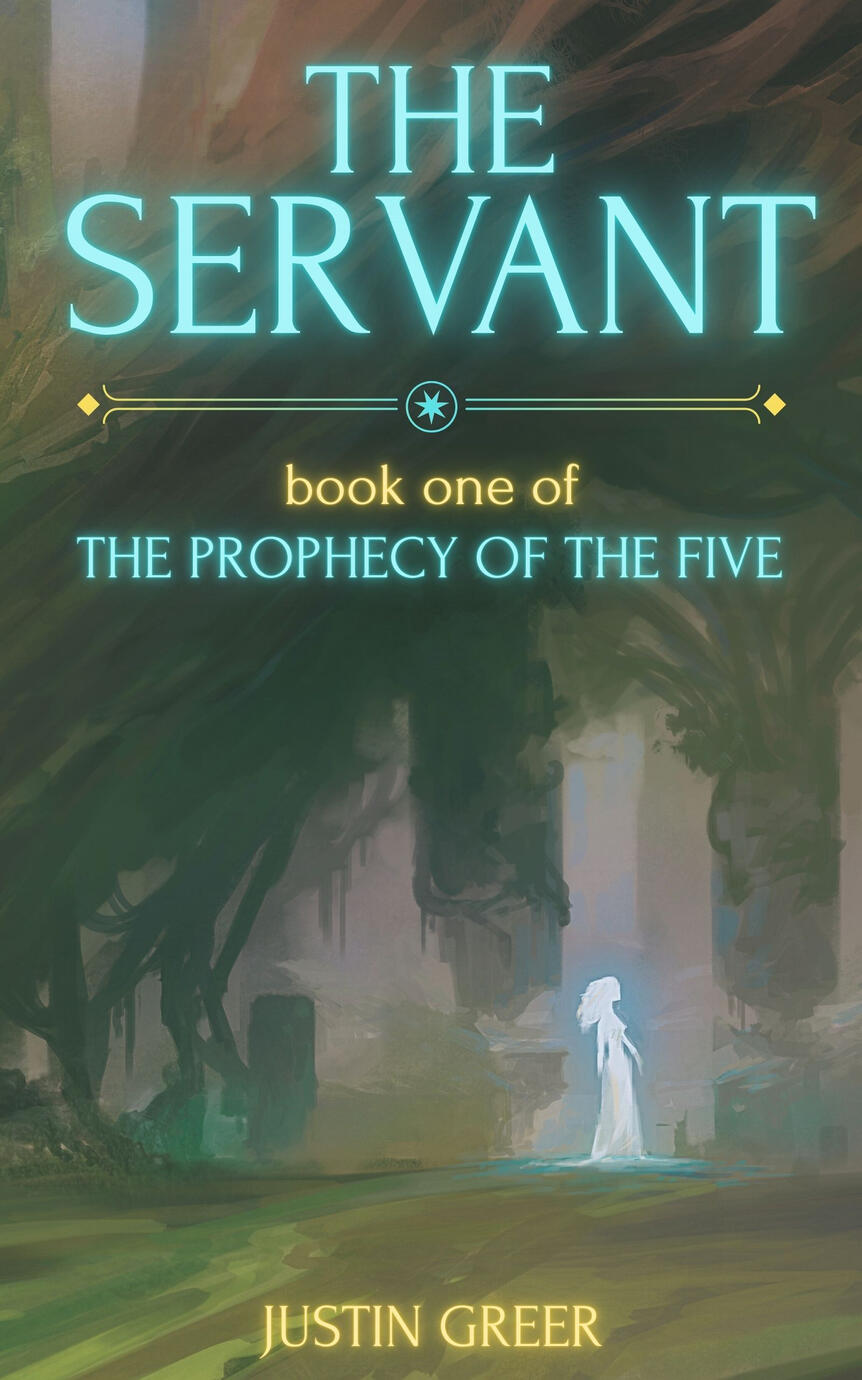
The Prophecy of the Five is a high fantasy series after the tradition of JRR Tolkien, Tad Williams, Robert Jordan, Kate Forsyth, and James Clemens.Click the button above to learn more about the series.
where to purchase
extras
general updates, announcements, events, thoughts, and progress on my various projects, updated as often as I can
links for contacting me and finding me on various social media platforms
commentary and other tidbits about my writing (from a metatextual perspective), as well as writing about other writing/genre topics
sign up for my newsletter and receive a free Garden Knight ebook!
Bibliography
Here's a complete list of all my books and stories, organized by series and with links to individual pages (where relevant) or purchase links.
The Garden Knight
A heroic fantasy-adventure series following Derry Melyvante, the gardener of Haverdell, who is accompanied by his loyal dog Barrow on a series of adventures involving magic, myth, monsters, and mayhem—always returning home to tend to his gardens and live a quiet, solitary life.Find the book covers below, as well as a link to the main webpage for The Garden Knight series, where you can read all about Derry and his world.
0.5: Leafdust & Deadwood
1: Tangleweed & Waterbloom
1.5: Splinterleaf & Hollowfrost
2: Woodfire & Lakelight
2.5: Lanternmoss & Shadowstone


The Prophecy of the Five
An epic high fantasy series about Ashera Eldibara, a 17-year-old woodland girl called as the Champion of World's Heart, who stands against the minions of Darkness in defense of all Reality.Find the book covers below, as well as a link to the main section of this site for this series.
1: The Servant

Other Works
"Songshadow"
This is a dark fantasy short story publication in the collection Tales of the Black Piper, Vol. 1, which is accompanied by a soundtrack album and an audiobook (and also features a bunch of other great stories, including one by personal favorite Kristen Britain!). Follow the link below to check it out!
the prophecy of the five
The Prophecy of the Five is a high fantasy series following Ashera Eldibara, a 17-year-old forest girl who dreams of the adventures she's read about in fairy-stories. When she finally finds one, she realizes that such tales are far more perilous than she ever expected. She is called to a holy quest as the Champion of World's Heart, the fated protectress of the lands of Eridëa against the minions of the eternal Darkness.
The series has been called "a powerful exploration of destiny and sacrifice set in an exciting fantasy world" (David Hopkins, author of The Dryad's Crown), "a world both timeless and new, wrought with wonder and written with soul" (Zammar Ahmer, author of The Book of Astea), and "classic fantasy at its modern best ... the book that I wish I'd grown up reading" (Graham Blades, The Wulvers Library).It's meant for fans of classic high fantasy and is suffused with my love for the genre, as well as everything I've learned from history, mythology, and folklore. Recommended for fans of JRR Tolkien, Terry Brooks, Tad Williams, David Gemmell, James Clemens/Rollins, Katharine Kerr, Kristen Britain, Tim Akers, Lloyd Alexander, Kate Forsyth, KV Johansen, Susan Cooper, and Robert Jordan.
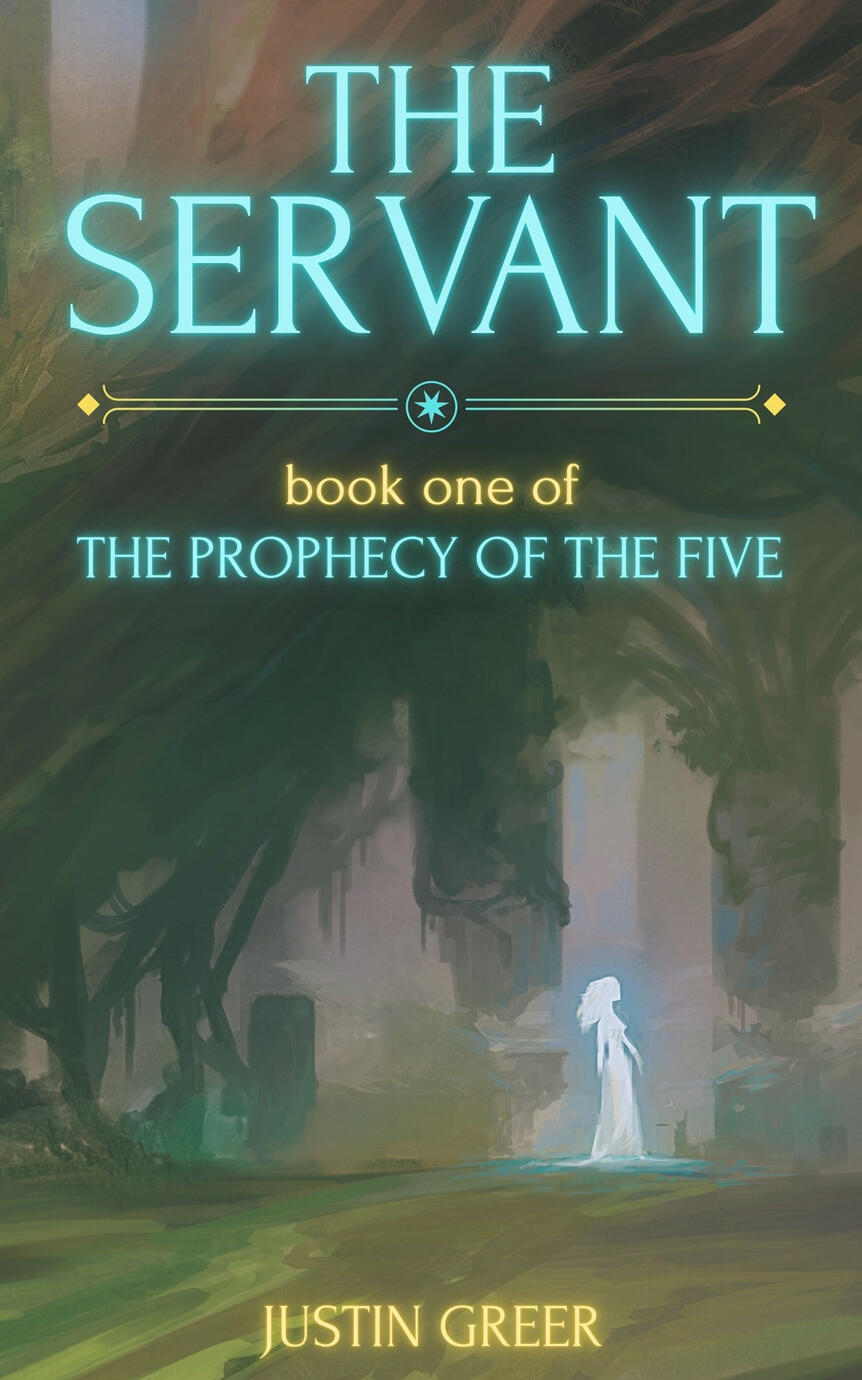
The first book in The Prophecy of the Five, The Servant, was released on June 28, 2025. It's available in ebook, paperback, and dust-jacketed hardcover, as well as signed & personalized via my site or with a signed bookplate via The Broken Binding.
—
Nearly a thousand years ago, the tyrant-sorcerer Mordechai betrayed his people, forged a weapon of darkness, and led an assault against the Middle Kingdoms to claim the throne of Reality. He slaughtered the defenders, broached the Shimmering Door, ascended to the Unseen Realm, and sought to make himself a god at the Heart of the World. Only at the last moment was he thwarted—by the sacrifice of a young woman, Lightbringer, who slew the Servant of Darkness and ended his terrible campaign.But now evil stirs in ancient strongholds, and blood-rituals claim the lives of innocents throughout the cities of the world, and fearsome shadow-monsters have reappeared to feast upon the living. The Servant has been resurrected. His armies have grown. His power has swelled. And he has resumed his bloody war against the free world. Again he marches for the Shimmering Door and the Heart of the World; and now there are few who remain to stay his hand.Only a young forest girl, Ashera Eldibara, has any hope of standing against Mordechai. She bears the Sword of Light, the fabled weapon of her predecessor, and its magic hums in her bones. Others stand at her side as protectors and guardians—a wizard, a warrior, and a huntress, each prepared to sacrifice all in the last desperate struggle against the Servant of Darkness.But they are few, and Ashera is young and untrained, inexperienced in the ways of magic and warfare—and the monstrous armies that she faces are vast and powerful . . . and already hunting her.
—
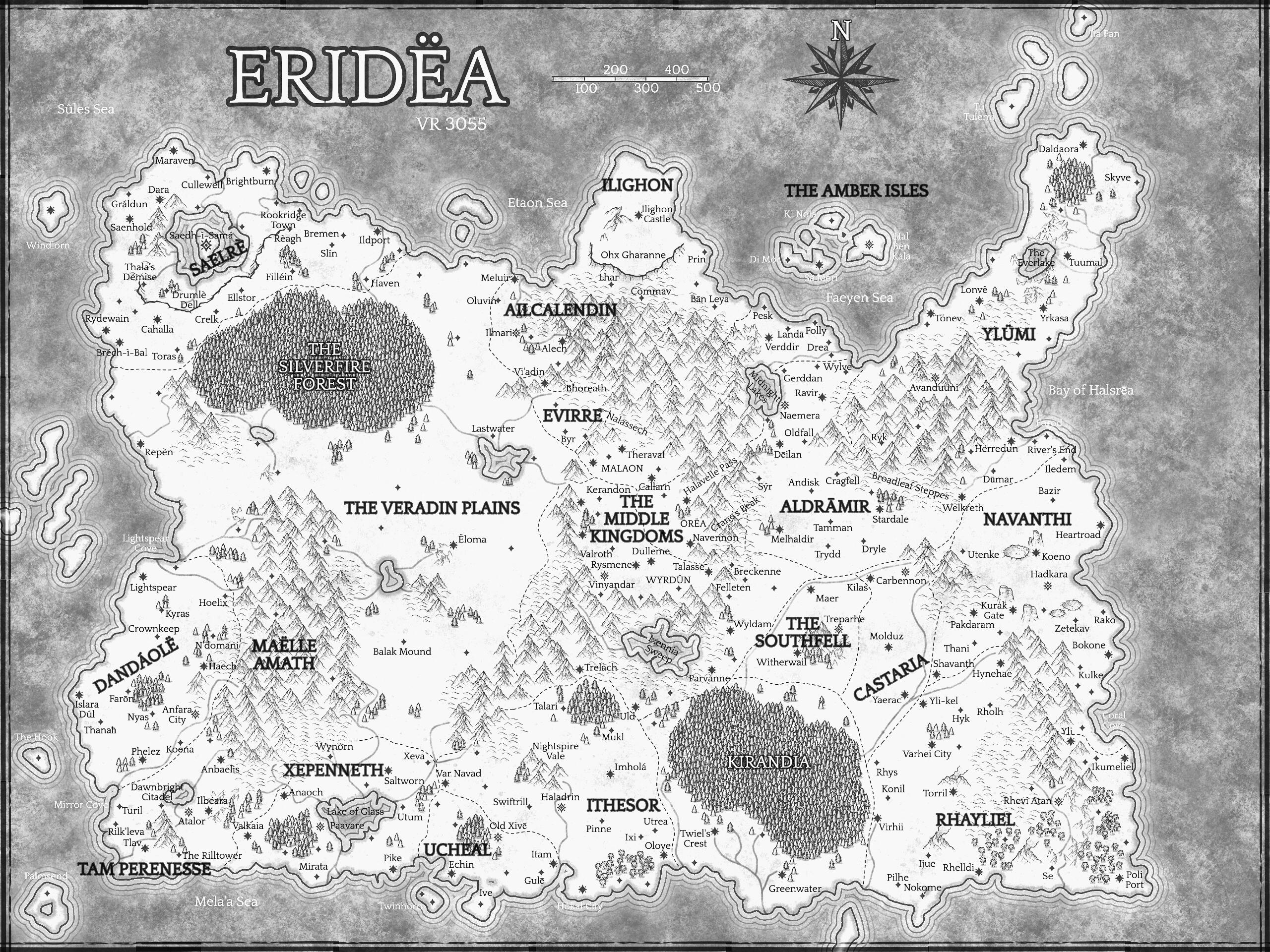
The Servant is 607 pages long and includes two maps, a woodblock-printing calendar wheel, and an appendix of further information, as well as a sneak peek for book two.
This page will continue to be updated as further information is available about The Prophecy of the Five. This will be a five-book series; book two is expected to publish in late 2026.Use the navigation buttons below to explore additional content
related to The Prophecy of the Five and the lands of Eridëa.
view high-resolution maps for the world of Eridëa
view character art, sketches, symbols, calendars, and other visual media
listen to curated playlists for each book in the series
explore the world of Eridëa further with glossaries, indices, deleted scenes, annotations and commentary, and more
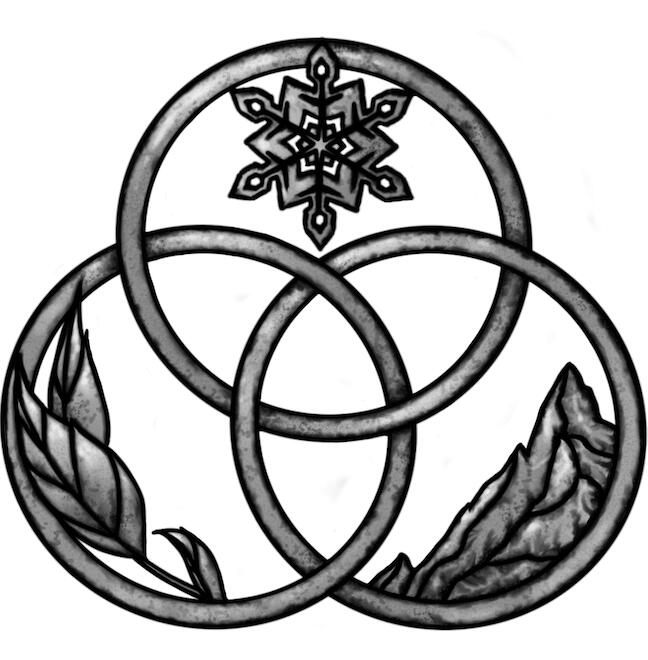
The ancient symbol of the Three Races following the War of Shadows: three interlocking rings with imagery representing the Fiarra (snowflake), the Kirandians (leaf), and the Jaidin N'dama (mountain). Each of the Three Races recognizes and employs this symbol with unique customizations; for example, the Jaidin N'dama tend to use red embellishments on the mountain for their heraldry.
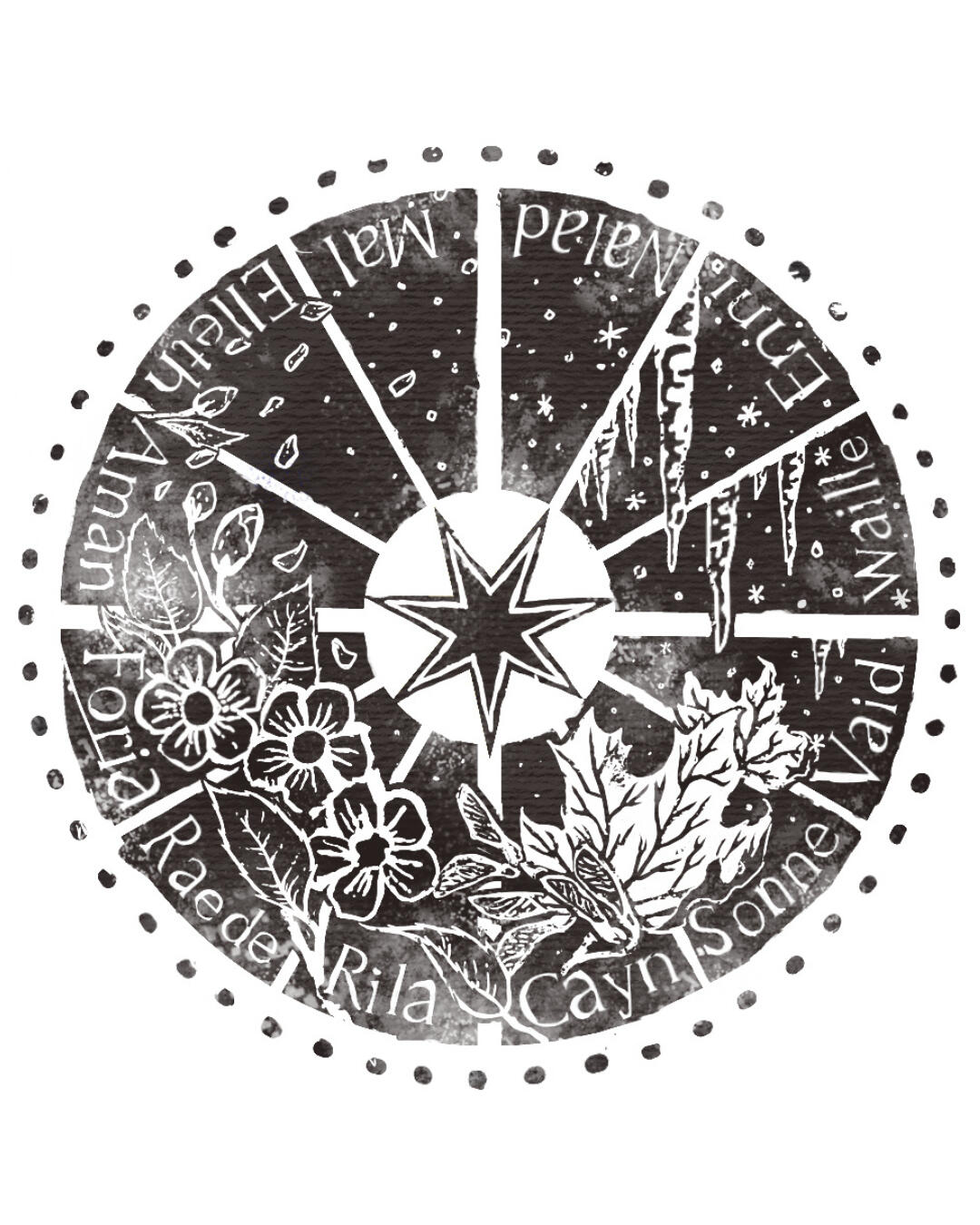
A woodblock printing of the calendar wheel common to Eridëa. The year begins at the 1st of Mal and ends at the 30th of Nalad. The 1st of Mal is also the first day of spring, with each season lasting three months.Scholars suspect that the calendar originated in the islands south of Eridëa, as the wheel moves widdershins.Each month comprises 30 days. The solstices (halfway through Raede and Enni) and the equinoxes (halfway through Elleth and Sonne) are not included in this count.
news & blog
This page is for general updates, announcements, events, thoughts, and progress on my various projects, updated as often as I can.Announcements and events are the main content, as well as progress updates for my main projects currently underway. For the blog side of things, anything noteworthy, fun, or unrelated to the books themselves—anything that's not an essay or ancillary material—will go here.News that is specific to The Garden Knight will also be crossposted to that site where pertinent, but everything will always be collected here as the main information hub for what's going on in my world.You can also join my newsletter or follow me on various social media sites to get up-to-date information about what's going on in my corner of the writing world.
UPDATE JUNE 30, 2026We've just passed the year mark for The Servant, so I wanted to do a brief retrospective. I've written an essay on what the book means to me (find that in the Essays & Extras section), so here's just a quick look at some numbers and thoughts:Hardcovers sold: 25
Paperbacks sold: 20
Ebooks sold: 19Goodreads/Amazon ratings: 22 (4.94 star average rating)
Added to Goodreads TBRs: 54Virtually no KU pages, so I guess people with KU don't feel like trying a big long high fantasy hahaI had three booksignings in that time, and sold copies of The Servant at each of them. Several copies are on consignment at my local Barnes & Noble, which is a dream come true. I stop by honestly pretty often just to see them sitting on the shelf.Not terrible overall! 64 copies sold in 52 weeks. If I could keep that pace up indefinitely, I'd be happy. And the reception seems pretty great; people seem to love it quite a bit overall.That's about it, I think. I have a few more essays/extras in the works and plenty more work to do on the website ... and the sequel to finish preparing ...
UPDATE FEBRUARY 23, 2026Just a quick update on current projects.Writing:
Prophecy of the Five #3: first draft: 15%
MG Fantasy #2: first draft: 35%
Crag's Folly short story: outlining: 87%Publishing/Revising:
Prophecy of the Five #2: final draft: 9%
Secret publication project: final draft: 5%Spending the next couple months just focusing on the above projects. Hoping to knock out MG Fantasy #2 and Crag's Folly by the end of March. We'll see!
essays & extras
This page is for commentary and other tidbits about my writing (from a metatextual perspective), as well as writing about other writing/genre topics. Essentially, this is where I can post essays about the writing process, inspiration for specific scenes/books, explanations of my writing philosophy and interests, and other information that in no way is canon to the books themselves but is from a more scholarly or fandom angle.(Contrast this with the "Ancillary Material" sections for each book/series, which contain in-universe information and notes that are more about the stories, not the process or interpretation.)Because The Garden Knight has its own website, I'll try to keep those essays & extras separate. Click the button below to head to that section of the TGK site.
These entries are posted as they're written, so there's no particular structure here. Once there are enough essays, I'll probably implement a hashtag/categorization system to keep them better organized.
High Fantasy and the Standards of the Canon
An essay about The Servant
June 30, 2026Those of you who’ve read The Servant are doubtless aware that it is steeped in the traditions, conventions, and standards of the high fantasy genre. Its inspirations are fairly overt: the world-scope, sense of nobility, and themes of sacrifice of The Lord of the Rings; the adventure-quests and party of heroes of the Shannara books; the heroism and courageous battles of David Gemmell; the weird magic, twisted monsters, and looming fate of James Clemens/Rollins; the sense of history, prophecy, and mythology of Memory, Sorrow, and Thorn; and a thousand other high fantasy inspirations like Lloyd Alexander, David Garland, Susan Cooper, David Eddings, Robert Jordan, Margaret Weis & Tracy Hickman, and more. The Servant represents my best effort to tell a tale in that tradition.(It seems I’ve mostly succeeded—many reviews call this “classic high fantasy” or “an homage to the greats,” which is both flattering and satisfying.)There’s not as much of a market for classic high fantasy as there once was, it seems. Grimdark, romantasy, and LitRPG have surged in popularity in the past couple decades. (Rightly so, insofar as I’m concerned: all three subgenres bring something new and exciting to the table.) There are probably a lot of reasons for this—we have lots of classic fantasy, but authors want to try a different take; many copycats and subpar imitators have diluted the allure of the genre; tastes and trends have changed among readers; and so on—but my purpose in this essay is less about “where did classic fantasy go” and bemoaning the lack of new authors in this tradition.Instead, I wanted to write briefly about why I chose to write books in this style, and why I never changed my mind even after working on The Servant for 25 years, and why I felt it was important to present Ashera’s story in this fashion, and why I’ll always consider The Prophecy of the Five my “first” or “main” series, even though there are plenty of reasons to consider it otherwise.I started working on The Servant when I was 10 years old. It was published when I was 35 years old. I’ve talked about this process in the acknowledgments section of the book, but it suffices me here to say that The Servant began as classic high fantasy because that’s what I was reading, that’s what I loved, and that’s what was selling really well, hence it was quite popular. I was drawing liberally from Shannara and Middle-earth in those early drafts; subsequent efforts mixed in some Dragonlance and Riftwar and Sword of Truth but never really shifted the fundamental genre of the story. As the tale grew, the inspirations multiplied greatly; I started pulling from videogames and music, from world mythology, from my own experiences. I read more and thought more and added more of what I valued to my art. The characters and plot shifted considerably. (Though many of the fundamentals remained the same—Ashera’s always been around, has always lived in the forest, has always had a sister, has always fought an escaped sorcerer.) The language of the writing improved and deepened all the way up to the final draft. The tone and narrative style changed, though in this case that was to more closely imitate the style of books I loved.In sum, the final draft of this book is much different than the first. But the essence of it remains the same—a high fantasy after the classic style.Likewise the forthcoming sequels have changed greatly. What began as a total ripoff of the Jerle Shannara trilogy has morphed into four books in which prophecy, destiny, gods, nature, storytelling, sacrifice, and hope are all explored on a grand stage of magic, heroes, and monsters, with plots and characters that I think are both unique and a loving blend of familiar. But the series remains high fantasy after the classic style, despite evolution and adaptation.Though I consider The Prophecy of the Five my first series, it’s not the first I published. Four books in The Garden Knight series were released prior to The Servant. And those books, though similar, are different in tone and scope. I call them heroic fantasy-adventures. They’re cozier, more contemplative, slower. They don’t deal with the same tropes and standards of classic high fantasy. They’re vaguely medieval, and they’ve got wizards and monsters and quests and knights and so on, but nobody is calling them “successors to Tolkien” (or even “ripoffs of Tolkien”). So even though they’re fantasy, and recognizable as my work, they’re not that same brand of fantasy as The Servant.As of today, I’ve also written about 15 short stories, most of them dark fantasy, sword & sorcery, or science fiction; a historical murder mystery; a more modern epic fantasy standalone; and nearly two middle grade fantasy-adventures. I’ve got outlines and ideas for another ~80 books across a wide range of series, and although those include dark fantasy, horror, science fiction, steampunk thriller, fable, high and epic fantasy, science fantasy, and a bunch of other subgenres and takes, none of them really fall into that “classic high fantasy” category.Once is enough, it seems. I want to be known for The Prophecy of the Five, but not stereotyped by it, I guess.So: why?Specifically, why have I built my writing with a classic high fantasy as the cornerstone? If that type of story—with a prophecy, a chosen one, a farmboy (forest girl), a warrior-guardian, a wizard mentor, a bad guy, a quest for a talisman, etc.—has already been done well so many times, and if I’m obviously interested in writing lots of other kinds of stories, why is The Prophecy of the Five so deliberately a throwback in many ways? Why do I think that’s important?Now, this may seem like a silly question. I’m not the only one to do classic high fantasy in 2026. Many others still do it quite well. And a big part of my answer is that it’s because it’s the kind of world and characters that the story demands: the classic nature is inherent to the tale.But I have lots of writer friends who started out with the classic impulse, writing after Jordan and Brooks and Tolkien, who then developed their craft and voice, veered away from that traditional style, and wrote something new and fun. Something still influenced by their first loves but definitely a departure. Something grimdark and bloody, or super whimsical and weird, or in a wholly different genre altogether. And that’s kind of why I’m asking the question of myself. If my friend loves Terry Brooks as much as I do, but chose to publish a bloody science fantasy series as his own work, why am I so strongly compelled to do The Prophecy of the Five the way I am?Yes, it’s what the story demands. Yes, it’s where many of my tastes still lie. Yes, I think there’s some satisfaction in seeing this world to fruition out of the tiny seed where it started.But the other reason—the whole point of all this, the important element that has driven the writing and polishing and publication of these books—is that I feel like it’s important for me as a writer to have a cornerstone of taste, style, voice, and purpose from which I can innovate. For me, it’s not enough to say: “Over there is Tolkien, and over here is my work, which takes certain elements and twists them in my own way.” For me, it’s important that I can use my own work as that bedrock, that “original flavor,” that archetype, that classical example. This work needs to be the pinnacle of all I can accomplish and all that matters most to me in fantasy, so that when I go and write a story with some weird science fiction elements or make something dark or tragic or weird or mixed up, those innovations are built upon the quintessence of high fantasy that I’ve already achieved.Certainly there would be no Garden Knight or dark fantasy short stories or science fantasy epics without The Prophecy of the Five, so it’s not just an intellectual endeavor but a real aspect of my writing process. All that I write is informed by the bedrock of The Prophecy of the Five. All of it is in conversation with those books. It’s a deeper and more personal example of how all my writing is also in conversation with The Lord of the Rings and Final Fantasy X and The Saga of Ragnar Loðbrok and the climax of Nightwish’s “The Greatest Show on Earth” and the smell of bacon and eggs and the sound of rain on leaves and all the other works of art that I’ve enjoyed and been inspired by. Having written the “original,” so to speak, I feel enabled to write variations.Dave Wolverton, the great SFF writer and inimitable writing coach, talked about picking characters as holding auditions. You’ve got the role of Prince Charming to fill. First up to audition is the actual Prince Charming. Next is an old knight gone to seed, paunchy, ruddy-faced, breath smelling of anise. Next is a ten-year-old boy who can barely lift his brother’s sword. Next is a girl in disguise. And so on—you have the role, but the person you cast in that role might surprise you.For me, The Prophecy of the Five is the role of Prince Charming filled by Prince Charming. It’s the story “as it ought to be told,” told straight and with hope and love and grace and talent, told sincerely, told as best I can. I think it’s a phenomenal story and that it works in so many ways. It’s not just an exercise or a “let’s get this out of the way so I can do some real writing.” It’s powerful, it’s meaningful, and it’s first and dearest for a reason. It does all I hope out of classic high fantasy. It tells the tale. Then it lets me tell other tales and explore new realms.But it will always have my heart, because it’s the story ten-year-old me wanted to write. I didn’t know how then. It took 25 years to get the first one into shape. Now, when I look at The Servant, I see everything I hoped it would be then.And it’s just the beginning—not only of the series, but of all the wonderful and weird stories to come later.
In addition to Amazon, The Broken Binding, and my own webstore, some of my books are available through other retailers. This isn't a complete list, but as I become aware of listings, I'll add them here.
I'm always eager to connect with readers and fans! Please feel free to message me on your platform of choice. I primarily post on Instagram, but I do my best to push updates to Threads, Twitter, and Bluesky also.My email address is [email protected], or you can use the contact form below.

My name is Justin Greer.I was born in Provo, Utah, and currently live just a few miles north in Lindon, Utah, though in between I have spent significant time in Mexico, Pennsylvania, and Wales.I've been writing stories for most of my life, starting with a yellow legal pad at age 10 when I first learned it was possible to write stories like the ones I loved. Over the years, my love for fantasy, adventure, science fiction, and horror has deepened and broadened, culminating in publishing my own stories for the world to read.I hope you'll enjoy reading my books as much as I've loved writing them. There are many more adventures forthcoming.My favorite writers include JRR Tolkien, Terry Brooks, David Gemmell, James Clemens/Rollins, Kate Forsyth, Brandon Sanderson, Steven Erikson, Tim Akers, David Dalglish, Poul Anderson, Bradley P. Beaulieu, Terry Pratchett, Italo Calvino, David Farland, Katharine Kerr, Edgar Rice Burroughs, Brian Lumley, and Tad Williams. You can see the influence of most of these writers in my stories.I'm also a big fan of music (pop-punk, Celtic, symphonic metal, synthpop, folk), movies (action, thriller, SFF, noir, comedy), videogames (The Legend of Zelda, Bravely Default, Valkyrie Profile, Final Fantasy, Skyrim, FromSoft, Kingdom Hearts, any Mario platformer), board & card games, Icelandic sagas, tabletop RPGs, and mythology. Many of these things also make their presence known in my fiction.Beyond writing, I'm a father of two fantastic boys and a husband to a wonderful wife. I spend my time reading, exercising, taking long walks, traveling, cooking, studying languages, and working as a freelance editor.